
NFL
President Trump vowed to launch the largest deportation operation in U.S. history — and he is delivering on that promise. In Minnesota, ICE officers are actively arresting hundreds of undocumented immigrants with serious criminal histories, including individuals convicted of rape, child sexual abuse, gang violence, and welfare fraud — people who never should have been allowed to stay in the country. These are not hardworking families seeking opportunity; they are dangerous offenders who exploited soft sanctuary policies pushed by leaders like Governor Tim Walz and Minneapolis Mayor Jacob Frey. The Twin Cities became a magnet for disorder because local officials chose open-border politics over public safety. Now, ICE is finally restoring accountability. Every criminal removed from our communities means safer neighborhoods, fewer victims, and less strain on taxpayers. These deportations prevent future tragedies that never should have happened in the first place. The loud protests against these operations are largely performative outrage from activists who oppose law enforcement and support unchecked illegal immigration. ICE agents are true patriots, risking their lives daily to protect Americans. Backing down now would betray citizens, encourage lawlessness, and ignore the millions who voted for secure borders. President Trump is right: deport criminal offenders — no amnesty, no exceptions. Minnesota and the entire nation deserve safety, not protection for lawbreakers. Support ICE. Support Trump. Let’s Make America Safe Again 🇺🇸

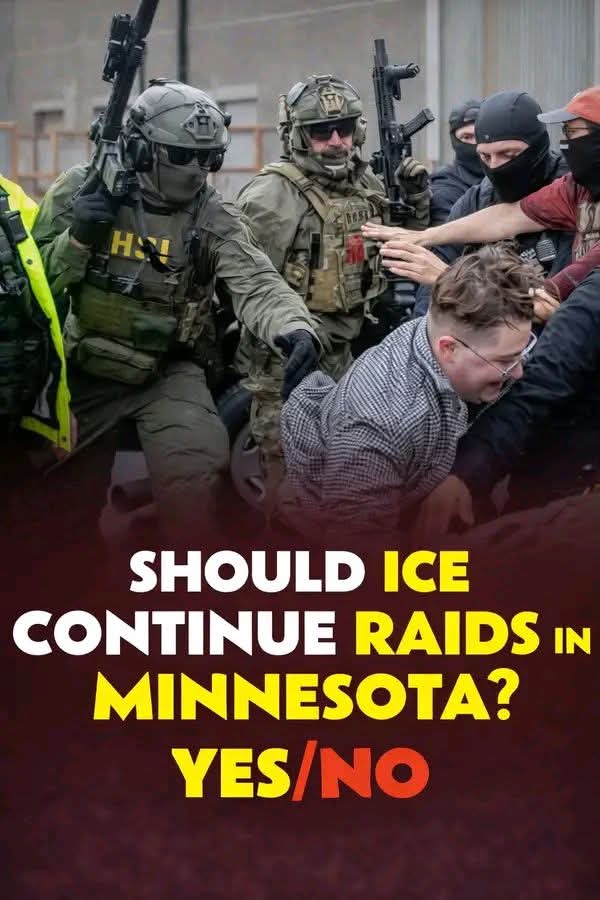
Minnesota Becomes Ground Zero in Trump’s Immigration Enforcement — But a Fatal Shooting Has Shifted the Narrative
In early January 2026, the U.S. Department of Homeland Security deployed what it calls the largest immigration enforcement operation in U.S. history to Minnesota, an intensification of federal efforts to detain and deport undocumented immigrants — including those with serious criminal histories. Federal officials reported arrests of more than 2,000 individuals, including people convicted of violent offenses such as murder and child sexual assault. The Justice Department framed the operation as a necessary restoration of accountability in communities where local leaders have resisted aggressive enforcement
But what was intended as a demonstration of federal authority and an answer to critics of sanctuary policies in cities like Minneapolis quickly turned into one of the most politically explosive and divisive law-enforcement confrontations in recent U.S. history once immigration agents fatally shot a local woman during an enforcement action in south Minneapolis.
The Fatal Shooting That Changed Everything
On January 7, 2026, a 37-year-old Minneapolis woman named Renee Nicole Good was fatally shot by a U.S. Immigration and Customs Enforcement (ICE) agent during an enforcement operation in a residential neighborhood. The Department of Homeland Security described the encounter as an incident in which the driver “weaponized her vehicle” and presented an imminent threat to officers, justifying the use of deadly force. The ICE agent involved was later identified in media reporting as a 10-year veteran officer.
Video footage taken by bystanders and reviewed by multiple outlets appeared to show a vehicle pulling away as an agent opened fire. Witnesses on the ground said the woman seemed to be moving away or attempting to exit the situation, raising significant questions about the justification for lethal force. Human Rights Watch, after examining multiple recordings, stated that the footage contradicted federal claims the vehicle was used as a weapon, and called the killing unjustifiable.
Tensions and Protests Erupt
The shooting — the first recorded homicide in Minneapolis in the new year — sparked immediate and widespread public outcry. Massive protests formed in Minneapolis within hours, and activists in dozens of other cities organized demonstrations that drew thousands of people demanding accountability. Some confrontations between federal agents and protesters turned tense, with pepper spray and physical clashes reported near immigration enforcement actions.
Local officials, including Minneapolis Mayor Jacob Frey, condemned the killing and called for federal agents to leave the city, asserting that the use of lethal force was unjustified. National political figures, such as Representative Ilhan Omar, publicly criticized the incident, urging greater scrutiny and accountability of ICE actions. �
Investigation and Jurisdiction Battle
One of the most contentious aspects of the response has been the handling of the official investigation. Initially, Minnesota state investigators with the Bureau of Criminal Apprehension (BCA) were working alongside the FBI. However, state officials say that the U.S. Attorney’s Office altered the arrangement, giving the FBI exclusive control and blocking Minnesota investigators from accessing evidence and witness interviews. State officials expressed concern that this will undermine public confidence and transparency.
Minnesota’s attorney general and county prosecutors have stated they will conduct independent reviews of the evidence to determine if state-level charges are warranted, but that effort has been complicated by federal control of the case materials. �
Federal Narrative vs. Local Reality
The Trump administration and Department of Homeland Security have defended the enforcement operation and the actions of the ICE agent. Homeland Security Secretary Kristi Noem labeled the incident as an act of “domestic terrorism” by the driver before any formal investigation was completed — a characterization that has been widely disputed by local leaders and video analysts. Vice President J.D. Vance echoed federal officials in defending the agent’s actions as justified under self-defense standards
But local leaders and legal experts have rejected that narrative. Minneapolis officials described the federal account of the altercation as unsubstantiated and contradicted by multiple video clips shared online. Lawmakers from Minnesota, including Democratic Senator Tina Smith, have accused federal authorities of orchestrating a de-facto coverup and undermining legitimate local involvement in the investigation. �
A Broader National Flashpoint
What makes the Minnesota situation uniquely combustible is that it comes at a time of heightened national debate over immigration enforcement, law-enforcement violence, and racial justice. Minneapolis was already a symbol of police reform struggles following the murder of George Floyd in 2020 — and the fatal shooting by a federal immigration agent has reignited deep-seated tensions between federal authority, local governance, and community trust